The brief
Lonely Planet is a travel media brand focused on delivering trustworthy, expertly-curated content to help travelers plan trips. As the brand expanded its range of products and tools, it recognized the importance of growing its audience and understanding their travel preferences. To do that, Lonely Planet needed a feature that enables users to create an account — providing a more personalized experience for our readers.
The goal
Deliver a product that gives Lonely Planet the ability to gather and store data and curate content. LP Profiles should be a centralized place to store user data and, ultimately, the core product for users to manage preferences, access saved content, and use LP products to plan their trips.
Deliverables
- — Profile pages
- — Login / Signup experience
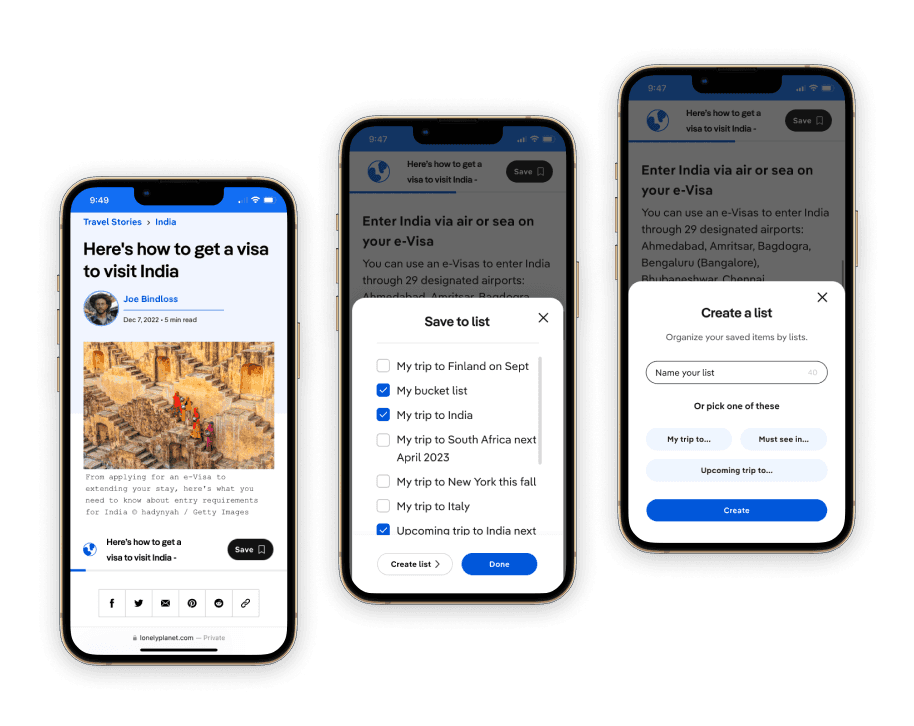
- — Saving content feature
Timeline
Oct 2022 – Mar 2023
Brainstorming, research & competitive analysis
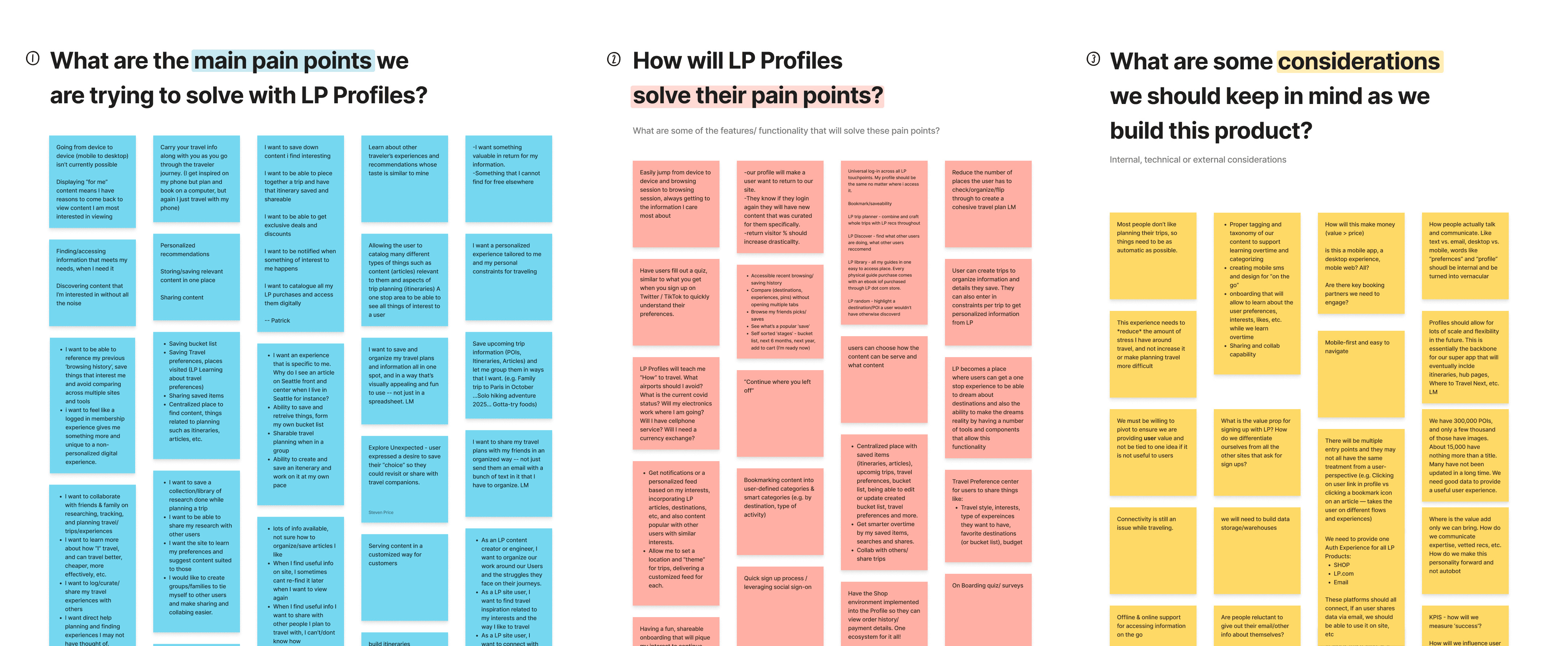
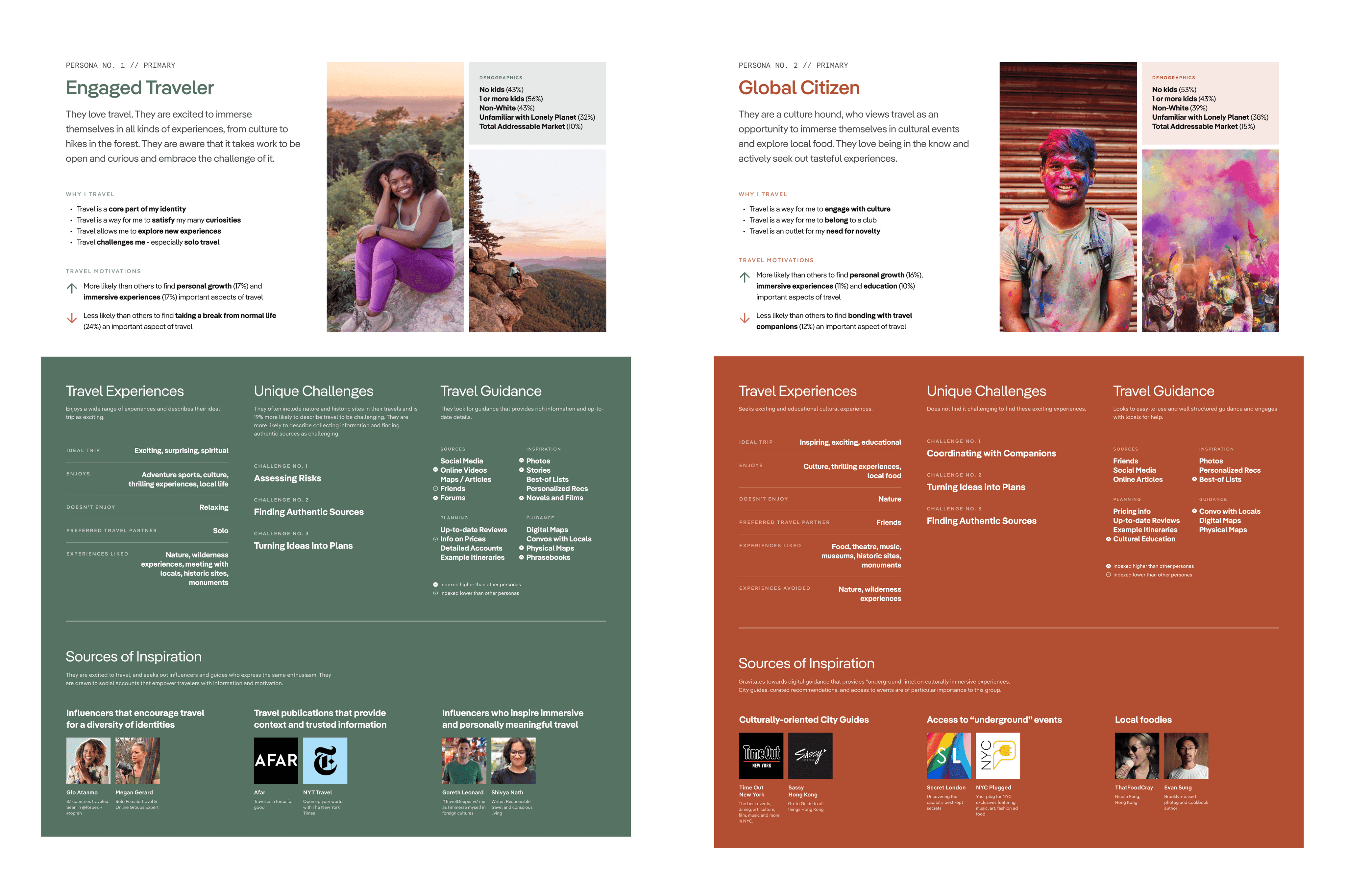
Before any design work could begin, we needed to define the problem we were solving and the main value props for creating an account from a user standpoint. As a broader group with stakeholders from various LP teams, we brainstormed ideas, pain points, and tech considerations. This cross-functional team used previous user data to identify and define the user personas we were targeting.
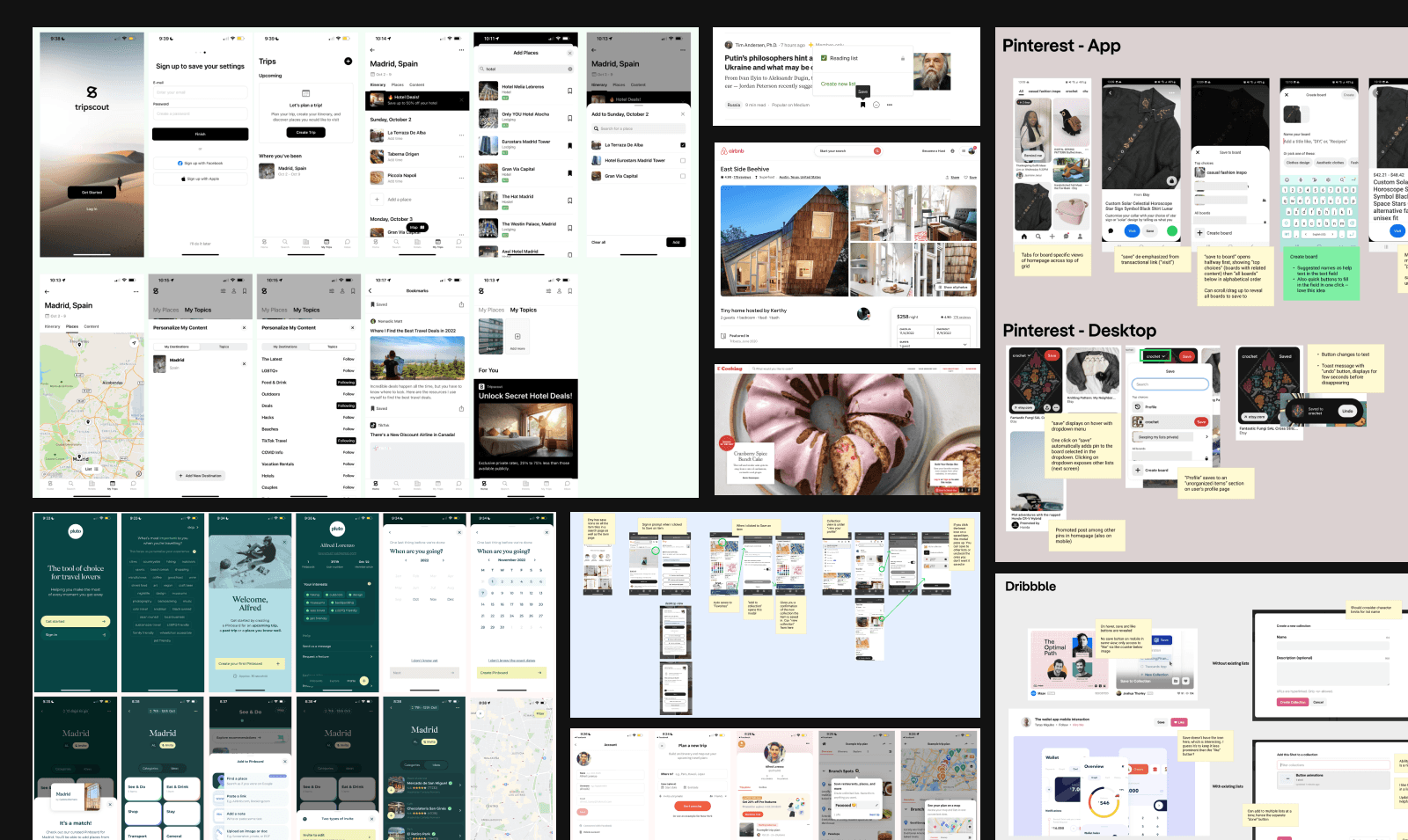
From this research, myself and the other product designer on the team conducted an extensive competitive analysis on media brands with a user profile product. We defined consistent features across these brands and what value props they used to drive sign-ups and return visits.
We used this information to define the list of features the product would need and what features we could put in front of users for testing.
Wireframing, mockups & user testing
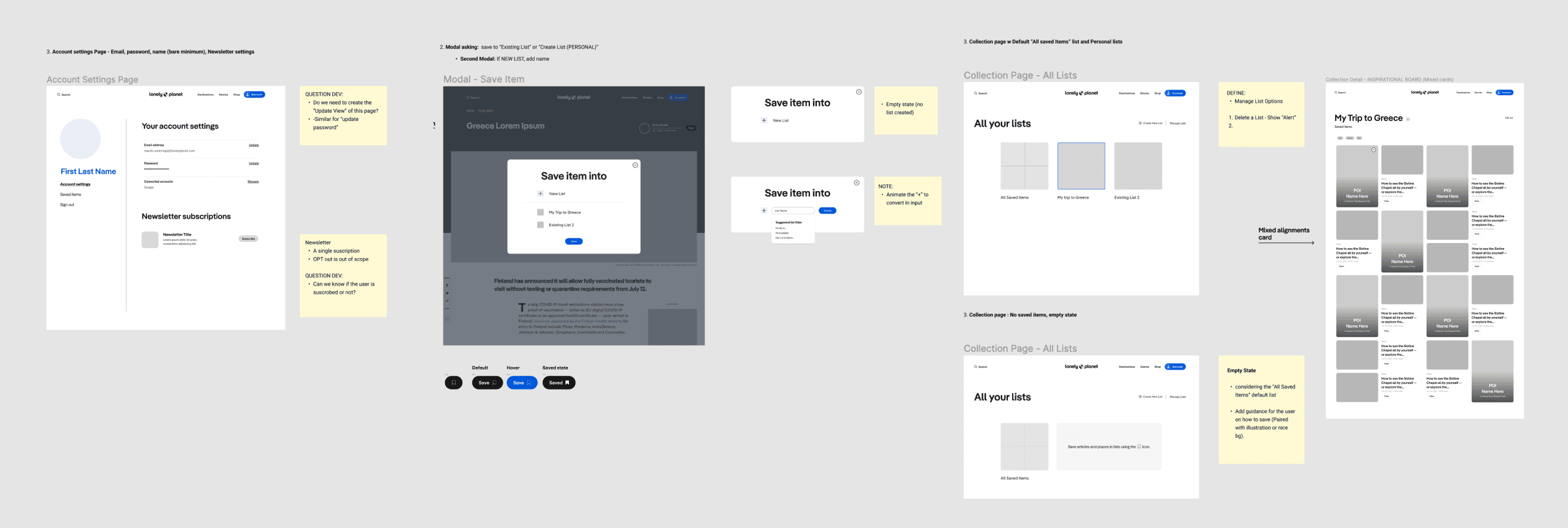
From the research phase we had a strong idea of the base features needed for a profile product: a sign in / sign up flow, an account settings page, and a navigation entry point. Beyond these, we needed a value prop to give users a real reason to create an account.
Using our competitive analysis, we tested a value prop allowing users to save various content types across the site, plus a second feature that let them organize saved content into lists based on travel plans or interests.
We started with lo-fi wireframes and presented at each stage to stakeholders for feedback. I worked with our Principal Engineer to define the capabilities of Auth0, the new login program — fast to implement but with limited design freedom. Once the user flow was settled, we built hi-fi mockups and prototypes that our UX Researcher used for user testing.
Results confirmed our value props for saving and organizing content, and showed how much importance users place on the save button — both in finding it and in their expectations of what happens when they click it.
Solution & results
We built a complete account creation user flow that has become the foundation for personalization at the company — a product that can be built upon to add features and additional travel planning tools to grow our audience.
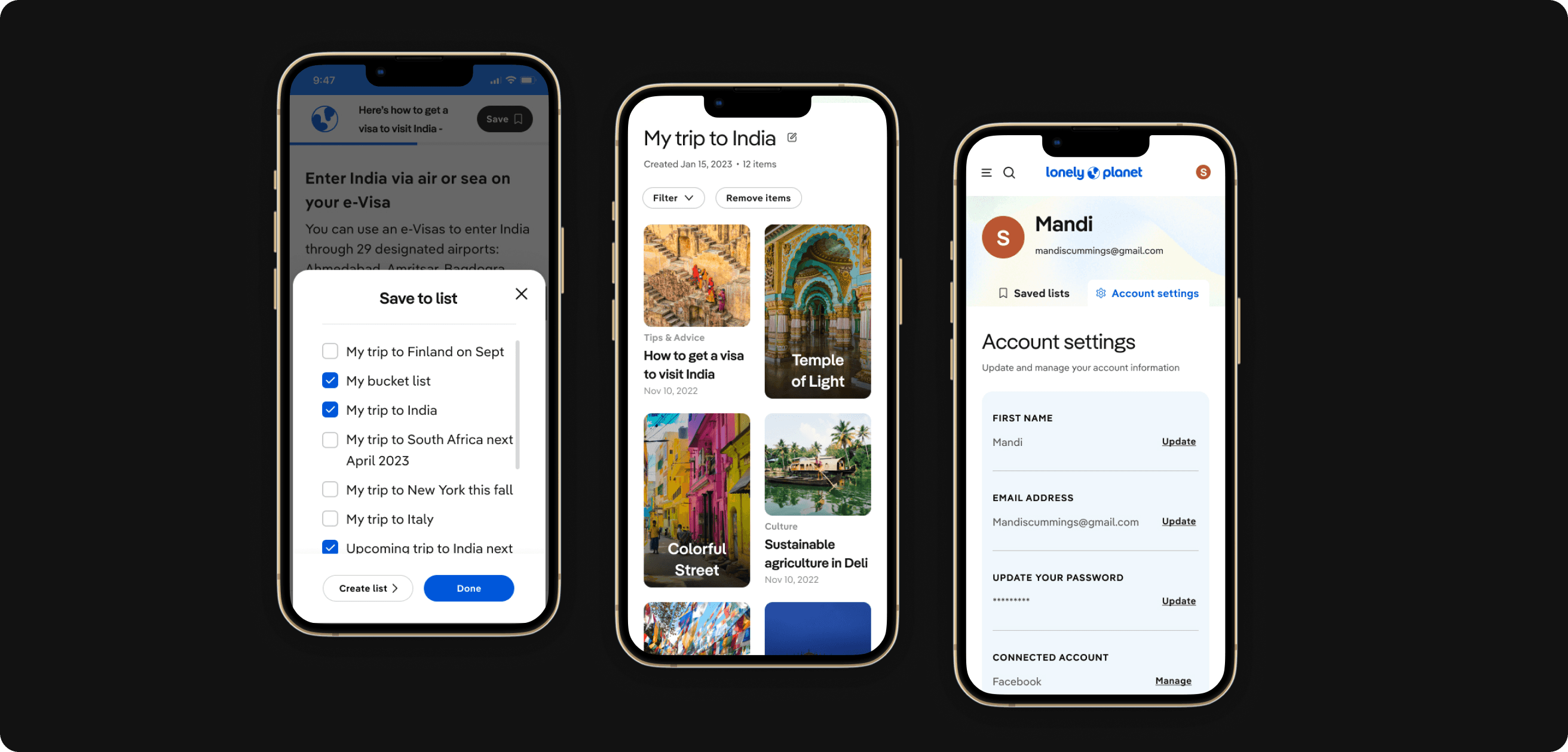
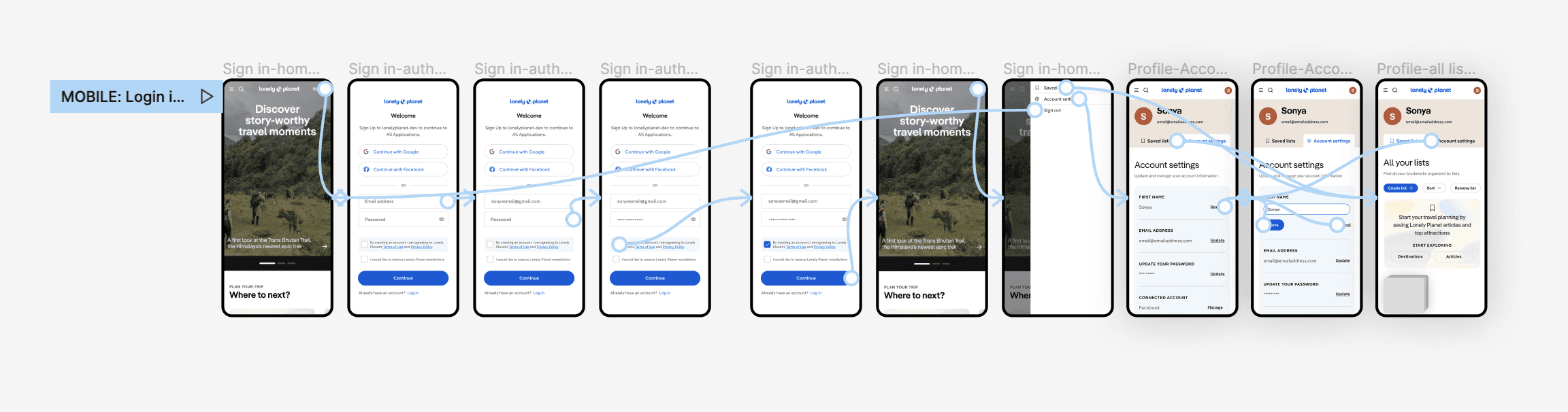
- A complete sign-up flow utilizing a new external program (Auth0)
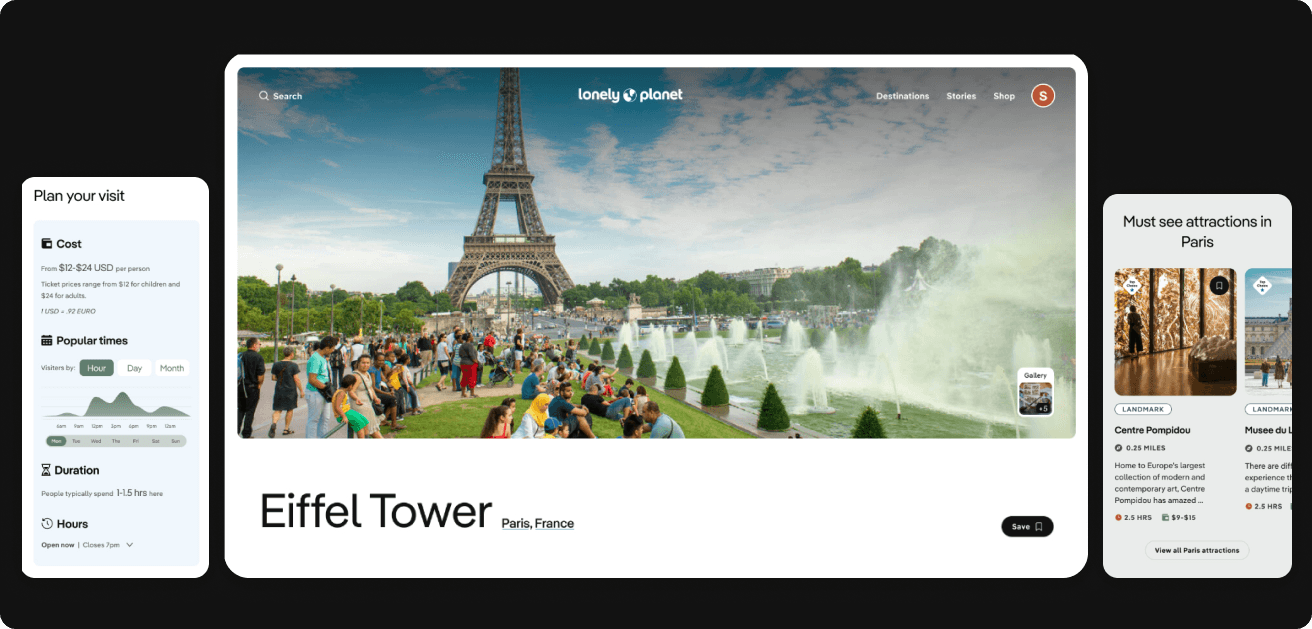
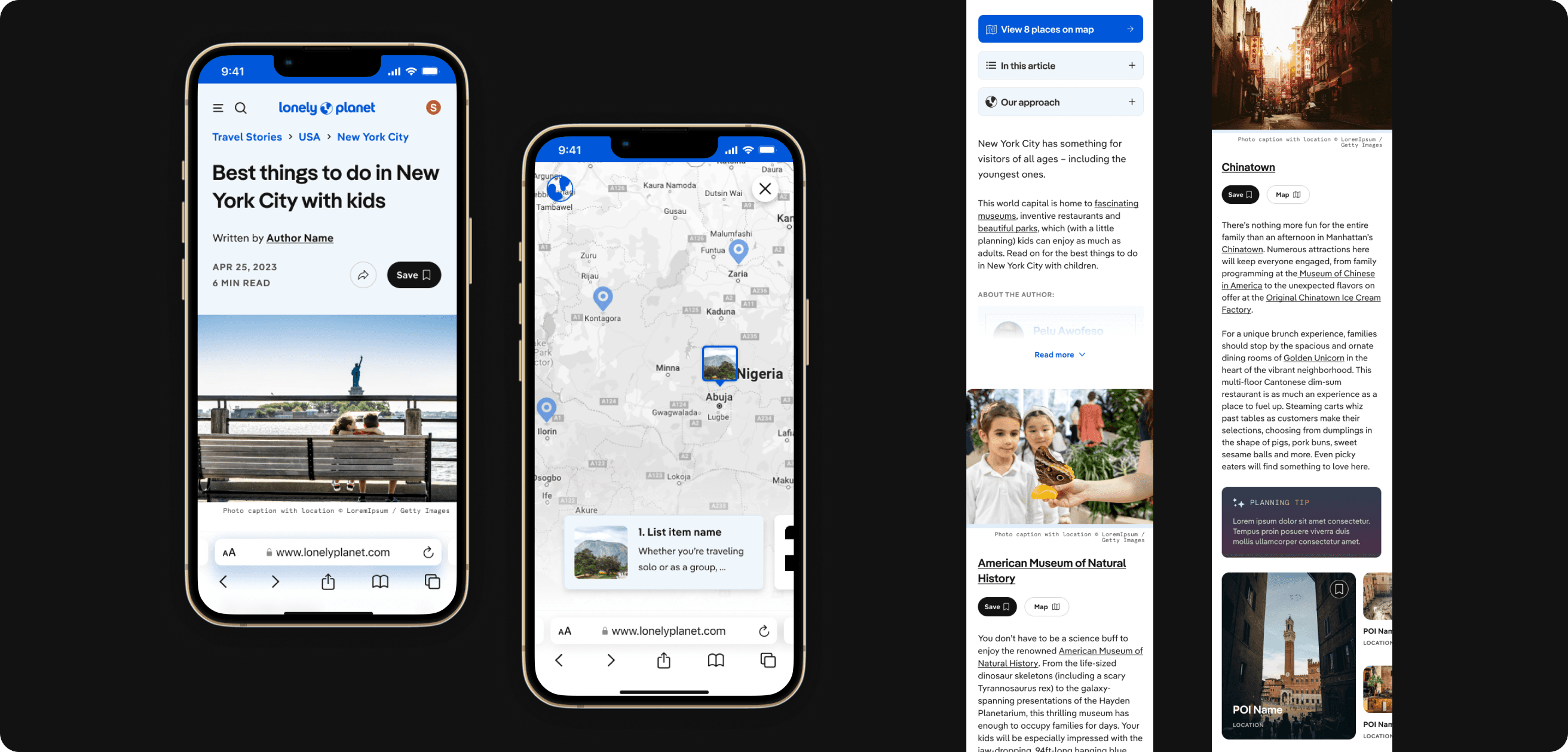
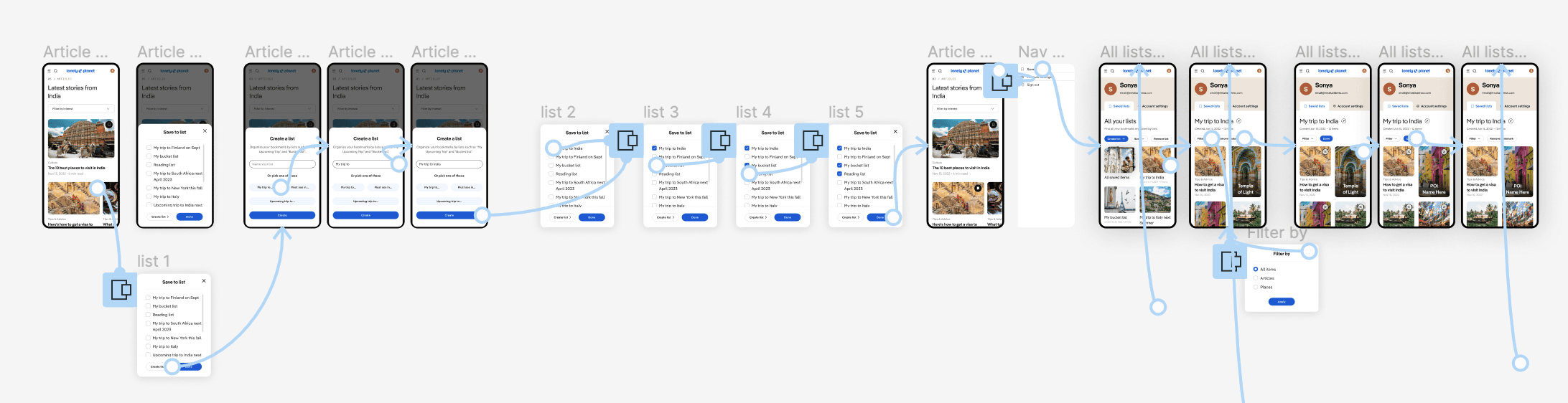
- A saving feature for helpful articles and points of interest tied to upcoming trips or content to revisit later
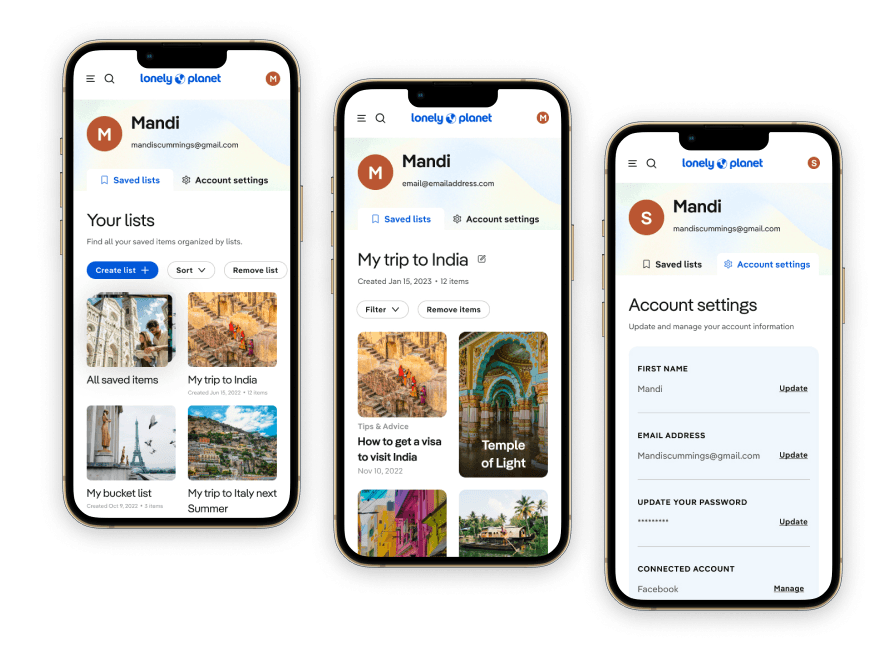
- A profile page with all of a user's saved lists
- A gallery-style list page showing all saved items within a particular list
- An Account Settings page for updating stored user information
Results
Even with a hefty goal of 1 million profile users by end of 2023, we hit over 100,000 users with positive trends each month. We've already begun adding features based on data from what users save and how they organize their lists.